Standing Off the Root Zone: A Fence Plan for Protected Trees and Hedgerows
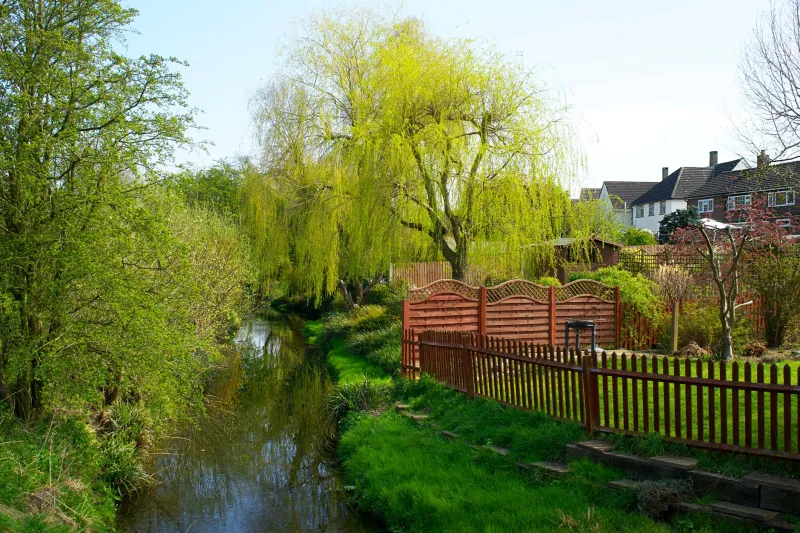
A boundary that runs past a mature oak, a established hedge or a line of protected trees is rarely improved by treating the ground as empty space. Roots spread far beyond the visible canopy, and the part of a tree most easily damaged is often the part no one sees. For homeowners and property managers, the sensible approach is not to avoid fencing near trees altogether, but to plan the line, the posts and the construction method with the root zone in mind from the outset.
Establish what is protected before the design is fixed
The first step is a desktop and site check, not a dig. In England, a Tree Preservation Order may protect individual trees, groups or woodlands, and trees in a conservation area have their own notification requirements for works. Hedgerows can also be protected where they meet the criteria for important hedgerows under the Hedgerows Regulations 1997. Planning conditions, restrictive covenants and site designations may add further constraints.
Local authority records are a useful starting point, but they are not always complete or easy to interpret. A call to the council's tree officer, made early, is usually more productive than a call made after posts have been ordered. Ask whether the trees or hedgerow along the proposed line are protected, whether the fence itself needs permission and what information the authority would expect to see before work begins. Keep a written record of the advice received.
Understand the root protection area in plain terms
Arboriculturists commonly use a root protection area, or RPA, calculated as twelve times the trunk diameter measured at 1.5 metres above ground level, subject to site-specific refinement. The RPA is a construction exclusion zone rather than a precise map of every root. Roots can extend beyond it, and the shape of the zone may need to be adjusted for existing structures, slopes or poor ground.
What matters for a fence project is that excavation, compaction, concrete and storage of materials within the RPA can all cause damage that may not become visible for years. A post hole is small, but a line of post holes, a delivery lorry turning on wet ground or a concrete mix spilled close to the trunk can add up. The design should therefore aim to keep the majority of disturbance outside the RPA and to minimise whatever disturbance remains.
Move the line before moving the ground
The most effective solution is often a design change rather than a technical one. Shifting a fence line by a metre or two, reducing the number of posts, introducing longer bays or relocating a gate can take the works out of the most sensitive ground. On some sites, a fence can be set back from the tree line and the gap used for planting or a low hurdle, so the boundary remains legible without placing foundations close to roots.
Where the boundary must pass near a protected tree, consider post-free spans or panels supported at points outside the RPA. Surface-mounted panels on suitable existing hardstanding can work where the surface is adequate and drainage is considered, but they are not a universal substitute for a traditional fence. No-dig ground screws reduce excavation, yet they still penetrate the soil and can strike roots. They should be specified with arboricultural advice rather than assumed to be harmless.
Hedgerows deserve their own assessment
A hedgerow is not simply a green gap between fence panels. Important hedgerows may be protected, and removing or altering one can require permission. Even where the hedgerow itself is not protected, nesting birds are protected by law, so trimming and removal work should be timed to avoid the nesting season. A fence placed hard against a hedge can also compromise future maintenance and encourage growth to push against the panels.
Where a hedge is to remain, set the fence far enough back to allow access for trimming and to avoid damaging the hedge base. Where a hedge is being replaced, establish the consent position first and consider whether a native hedge with a simple guard, rather than a solid fence, would meet the boundary objective with less ground disturbance.
Bring in an arboriculturist at the right moment
An arboriculturist is not only for schemes with a formal planning application. Early advice is valuable whenever a protected tree is close to the proposed works, when the RPA is unclear, or when the fence line requires any excavation within it. A short site visit can confirm the tree constraints, advise on post positions and set out a method statement for working near roots.
The council may expect a tree protection plan, supervision or a watching brief. These are not obstacles to be avoided; they are the evidence that the work can proceed without unacceptable risk to the tree. A contractor who understands the sequence will price the work more accurately and avoid the delay of stopping on site when an unexpected root is found.
Construction habits that reduce harm
On site, the practical controls are simple but need discipline. Fence off the RPA before materials arrive, keep deliveries and mixing away from the root zone, and avoid storing soil or panels against trunks. Hand excavation is slower than machine digging but gives greater control near roots. Any root encountered should be assessed rather than cut by default, particularly where it is larger than a finger.
Concrete should not be poured into root zones, and drainage should not be redirected into them. If services must cross the line, route them with the same care as the posts. A written method statement, a pre-start briefing and a final check before backfilling will do more for tree health than a last-minute instruction.
A boundary that lasts on both sides of the line
A durable fence and a healthy tree are not opposing aims. They depend on the same early decisions: confirming what is protected, understanding where the roots are likely to be, moving the line where possible and choosing a construction method that matches the ground. The result is a boundary that can be maintained for years without turning a straightforward fencing project into a consent dispute or a tree-health problem.