Centimetres Well Spent: Fencing and Gating a Narrow UK Side Return
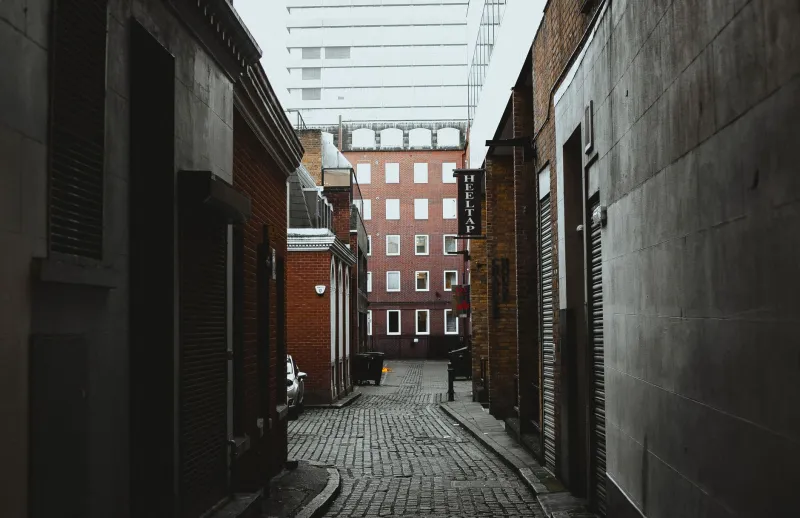
A side return is rarely generous. Between terraced houses, or along the flank of a semi-detached property, the passage may be little wider than a wheelie bin with the lid raised. Yet this slim corridor often carries a surprising amount of daily life: bins, bicycles, garden tools, deliveries and the occasional sprint to the back door. Fencing and gating such a space is not simply a matter of choosing the narrowest panel available. It requires a measured approach, because every centimetre removed from the route has to be justified.
At Crescent Fencing, the practical starting point is always the same: establish what the passage actually offers before deciding what to install. A boundary built to last must also be a boundary that works in use, and in a confined side return that means respecting clear openings, gate swing, latch reach and the ordinary movement of people and equipment.
Measure the passage, not the fence line
Begin with the clear width between the buildings, not the width of an existing fence or gate. Measure at the narrowest point and at several heights, because older walls are seldom plumb and projections can reduce the opening unexpectedly. Downpipes, gas meter boxes, air bricks, alarm boxes, drainage covers and soil pipes all take space. So does the fence itself: posts, frame, hinges and the gate leaf must fit within the passage without creating a pinch point.
Record the usable width after these obstructions have been allowed for. A nominal 900mm gap may offer considerably less once a gate post and a downpipe are in place. For a gate, allow a small clearance at each edge so that the leaf does not bind in damp weather or scrape the wall. A useful rule is to design around the narrowest real-world dimension rather than the most convenient one.
It is also worth checking boundary ownership before work begins. In terraced and semi-detached properties, the fence line may not belong to the property that appears to use the passage. A conversation with the neighbour, and a look at title plans where available, can prevent an otherwise straightforward installation from becoming a dispute.
Choose a gate that suits the gap
A standard gate is not necessarily a suitable gate. In a narrow side return, the leaf width, frame thickness and hinge arrangement all affect the clear opening. A single leaf is often the simplest solution, but it must be sized to the available space rather than forced into it. If the opening is unusually tight, a bespoke gate with a slimmer frame may be more appropriate than a standard garden gate trimmed down on site.
The direction of swing deserves careful thought. An inward-opening gate keeps the leaf off the public footway and is usually preferable where the passage leads to a rear garden. However, it must not foul bins, bike storage or a step. An outward-opening gate can work where there is safe space to open it, but it should not swing across a pavement, a shared access route or a neighbour's entrance. In some cases, setting the gate back slightly allows it to open against a wall and out of the walking line.
Where the passage is extremely narrow, alternatives such as a bi-fold gate or a sliding gate may reduce the swing arc, though both require sound fixing points and regular maintenance. These are not automatic improvements; they simply redistribute the space required. The important point is that the gate should open, close and latch without the user having to manoeuvre around it.
Latch and handle position matter as much as the hinge. A handle set at roughly 900mm to 1100mm above ground is usually comfortable for most adults, but in a tight passage it should be low-profile so that it does not catch clothing or reduce the walkable width. The latch should be reachable from both sides and should not require the user to lean across a bin or squeeze past the gate leaf. Key-operated latches and self-latching mechanisms can improve security, provided they remain easy to operate in the dark and in wet weather.
Keep bins and bikes moving
A side return is often the only route to the rear garden, so storage must not become a permanent obstruction. Measure the largest item that regularly uses the passage. A standard 240-litre wheelie bin is roughly 580mm wide, but the practical space needed is greater once the lid is opened and the bin is turned. Bicycles need room for handlebars and pedals, and a bike pushed through a gate at an angle needs more clearance than one wheeled straight ahead.
The gate's clear opening should therefore be judged against the largest object plus the person moving it. A gate that is adequate for a person carrying a bag may be frustrating for anyone moving a bin. Where storage is unavoidable, keep it to one side and choose hooks or racks that do not protrude into the route. Avoid a raised threshold across the passage unless drainage genuinely requires it; a small lip can be awkward with wheeled bins and bikes.
Security without a tunnel
A narrow passage can feel darker and more enclosed than a open garden boundary, and a full-height solid fence on both sides may turn it into a corridor. Security and light do not have to be opposites. A solid, well-fitted gate at the front boundary provides the main controlled entry point, while the internal fence can include subtle gaps, slatted panels or a lighter finish that reduces the tunnel effect. The aim is to avoid deep recesses and blind spots, not to eliminate every gap.
Good lighting is valuable, but it should be directed carefully. A small PIR-controlled light at the gate and another near the rear door can improve safety without glare. Keep the route free of clutter, secure gate hinges against lifting, and ensure that the gate cannot be opened by reaching over or through it. In a confined space, careful detailing does more for security than adding height that may not be permitted or appropriate.
Detail for the British weather
Confined passages often stay damp longer than open gardens. Timber needs clearance from walls and ground, adequate ventilation and a finish that can be maintained. Metal frames can be slimmer, but fixings should be suitable for a damp environment and posts must be set securely. Drainage should be considered before concrete is poured: water that once ran across a gap will not disappear because a fence has been fitted beside it.
A narrow side return rewards restraint. Measure the usable width, choose a gate that opens cleanly, keep the route clear and design the boundary to provide security without shutting out daylight. Handled in that order, even the tightest passage can become a practical and dependable part of the property.