Cheap Fences, Costly Winters: Why the Lowest Quote Rarely Delivers a Lasting Boundary
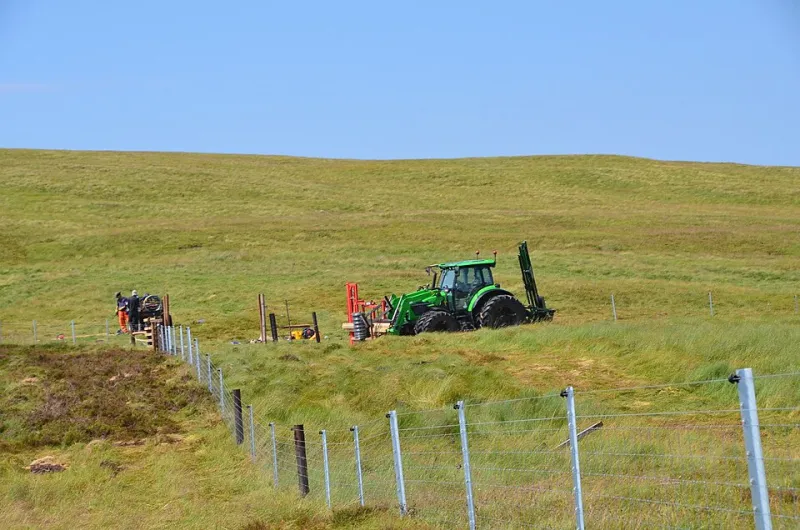
Photo: Jim Barton , CC BY-SA 2.0, via Wikimedia Commons
A boundary is one of the few purchases a property owner makes that is expected to face everything the British weather can deliver for a decade or more. Yet fencing is often bought in the same way as a disposable household item: by comparing headline prices and choosing the lowest. That approach may look prudent on the day the quote arrives, but it frequently proves expensive over the life of the fence.
The appeal of the bargain boundary
Low-cost fencing is not automatically poor fencing. There are competent contractors who work efficiently and offer fair prices. The difficulty is that a headline figure says very little about what is being installed. Two quotes for the same length of boundary can differ substantially because of post dimensions, concrete specification, fixing quality, gate construction and the care taken over ground conditions. When price is the only measure, those differences tend to disappear from view.
In the UK, the consequences of those hidden differences are rarely immediate. A fence installed in spring may look entirely satisfactory through summer. The test comes with driving rain, frost heave and the gusty winds that affect exposed and coastal sites. By then, the contractor may have moved on and the apparent saving may be consumed by repairs.
What UK weather does to weak specifications
British winters are not uniformly severe, but they are persistent. Timber spends weeks at high moisture content, ground can remain saturated, and repeated freeze-thaw cycles move soil and footings. Wind loads on a solid boundary are significant, particularly on exposed runs and at corners. A fence that is marginal in specification has little reserve when those conditions combine.
Thin posts are a common weak point. A post that is undersized for the panel it carries may perform adequately in still weather but flex under gusting. Shallow or weak concrete footings allow movement, which in turn loosens fixings and distorts panels. Inadequate treatment or poor detailing at cut ends can lead to premature rot, especially near the base where water collects. Gates add another layer of stress: a gate that is poorly aligned when installed will usually worsen as the ground moves and the posts settle.
Where cheap installations tend to fail
The failures are rarely dramatic at first. They appear as a gate that drags, a post that rocks, a panel that rattles or a run of fencing that begins to lean. Each individual fault may seem minor. Taken together, they signal a boundary that is losing structural integrity and will need increasing attention.
The longer-term cost is not only the repair bill. It includes disrupted access, security concerns, damage to adjoining property and the management time spent arranging call-outs. For commercial property managers, there is also the risk of a boundary failure affecting operations or public safety. These costs are difficult to see in a low quote, but they are real.
The decade view
A useful way to compare fencing quotes is to consider the expected cost over ten years rather than the cost on installation day. A higher initial specification that needs only routine maintenance may prove cheaper than a low-cost installation that requires repeated repairs, early replacement or emergency work after a storm. This is not an argument for paying more than necessary. It is an argument for understanding what the price includes.
A boundary built to last should have posts suited to the panel and wind exposure, footings designed for the ground conditions, fixings that resist corrosion and gates installed with proper alignment and allowance for movement. Those details cost money, but they are the reason a fence remains serviceable rather than becoming a recurring expense.
Judging a quote on value
Property owners can assess a fencing quote without technical expertise by asking a few straightforward questions. What post dimensions and materials are specified? How deep and wide are the footings, and what concrete is being used? How will the contractor deal with poor drainage or sloping ground? What is the guarantee, and what does it actually cover? For gates, how will alignment and future adjustment be handled?
It is also reasonable to ask for evidence of similar work in exposed or coastal conditions, and to confirm that the quotation is site-specific rather than a standard rate applied without inspection. A contractor who is willing to explain these points is usually one who expects the installation to last.
The race to the bottom on price is understandable, particularly when budgets are tight. But a boundary is infrastructure, not decoration. In UK conditions, the cheapest quote often carries the highest long-term cost. Judging fencing on value, specification and suitability is the more prudent approach, and it is the difference between a boundary that merely survives the winter and one that is built to last.