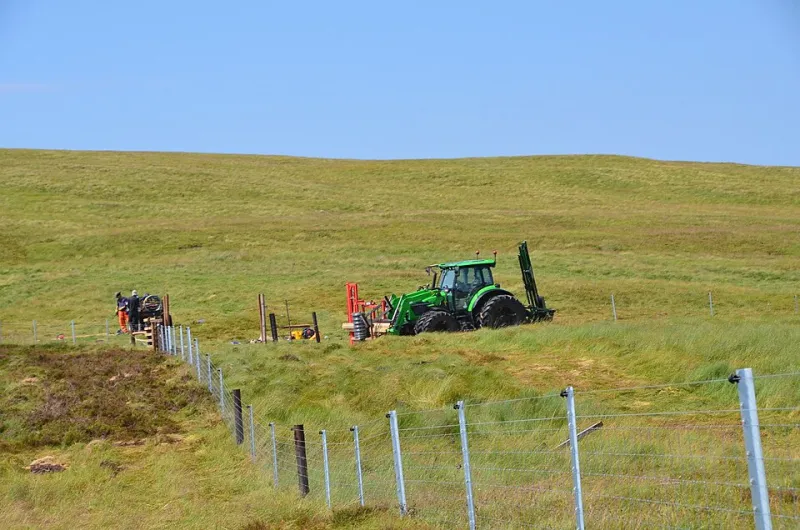
Gale-Ready Boundaries: Nine Checks to Complete Before the 2026 Storm Season
Photo: Evelyn Simak , CC BY-SA 2.0, via Wikimedia Commons
With the 2026/27 winter storm season close at hand, a boundary that has performed quietly through summer can fail quickly once sustained rain and gusting winds arrive. For homeowners and commercial property managers alike, the most cost-effective response is not a reactive call-out after a named storm but a structured audit now, while faults are still small and contractors have capacity.
Why an autumn audit matters
November is a sensible point to inspect fencing and gates in the UK. Timber has had a full season of alternating wet and dry weather, metal fixings have been exposed to damp, and gate hardware has been used repeatedly. Small defects such as a softened post base or a loosened bracket can be addressed as routine maintenance. Left until the first gale, the same defects can become a fallen panel, a blocked access route or a damaged vehicle.
A useful audit is not a casual walk along the boundary. It should be systematic, recorded and prioritised. The following nine checks provide a practical framework for domestic and commercial sites.
The nine checks
-
Post condition and footings. Test each post for movement and inspect the base for soft timber, cracking or exposed concrete. Pay particular attention to posts set in ground that stays wet. A post that rocks under hand pressure is already a wind-loading risk.
-
Panel and rail security. Check that panels are firmly fixed to posts and that rails, brackets and screws are sound. Look for lifted caps, missing fixings and panels that rattle in a light breeze. On commercial sites, confirm that temporary or storm-damaged sections have not been left in place.
-
Gate hinges, latches and gate posts. Open and close every gate by hand. Sagging, heavy operation or a latch that no longer aligns usually points to worn hinges or a moving gate post. Gate posts carry greater loads than line posts and should be checked with particular care.
-
Automated gates and access control. For automated gates, arrange a service check before winter. Confirm that safety devices operate correctly, that the manual release is accessible and that the power supply and control enclosure are weather-tight. Commercial property managers should also confirm that service records and emergency contact details are current.
-
Drainage and ground levels. Standing water softens ground and accelerates post failure. Check for blocked gullies, compacted surfaces and downpipes discharging along the fence line. Where paving or drainage changes have altered run-off, the fence may need local protection or adjustment.
-
Wind-loading weak points. Exposed runs, corners, end posts and boundaries on higher ground take the greatest wind load. Check for loose capping, gaps between panels and posts, and climbing plants that have been allowed to bridge fixings. A solid panel in a very exposed position may need a specification review rather than repeated small repairs.
-
Boundary obstructions and adjoining structures. Trees, hedges, sheds, bins and stored materials can damage fencing or catch wind. Clear vegetation away from panels and check that adjoining structures have not pushed posts out of line. On commercial sites, consider vehicle movements and stock storage near the boundary.
-
Coatings, treatments and corrosion. Timber treatments and metal coatings are protective, not permanent. Look for flaking paint, rust at cut edges and fixings that have begun to corrode. Mixed metals can accelerate corrosion, particularly in coastal areas.
-
Records and emergency planning. Photograph defects, note their location and rank them by risk. Keep contractor details and insurance information to hand. A short written record makes it easier to decide what can be repaired and what should be scheduled for replacement.
Repair or replace?
The audit should separate maintenance from capital work. Localised loose fixings, a worn gate hinge or a minor drainage issue are usually straightforward repairs. A pattern of movement across several posts, rot below ground level, widespread panel instability or automation that no longer meets safe operating requirements may make replacement the more economical course. The key is to make that decision before storm damage forces it.
Boundaries built to last are maintained before failure, not after. A methodical inspection in November 2026 gives property owners time to act calmly, obtain competitive quotes and avoid the premium rates and delays that follow a named storm.