The Green Boundary's Long Game: Planting, Support and Upkeep for Fences That Last
A living boundary is a structural relationship
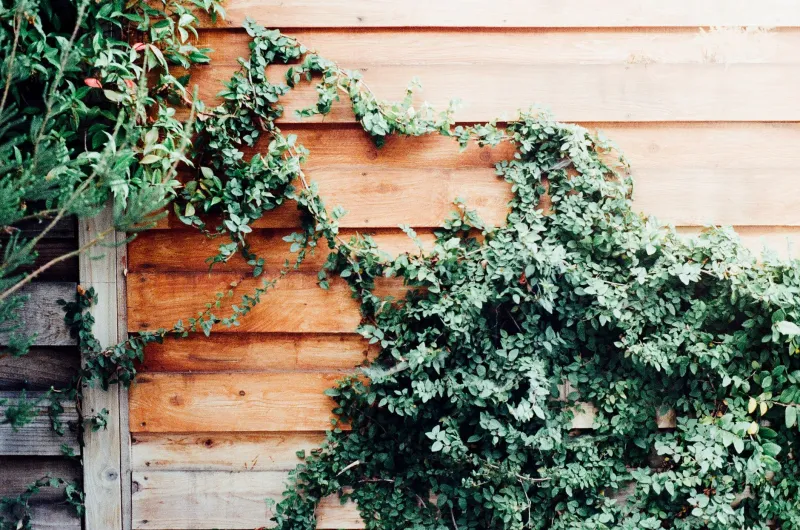
A fence with plants growing over it looks settled, even timeless. In practice, it is a relationship between two things that change at different speeds. The fence is fixed, finished and vulnerable to moisture. The plant is expanding, searching for light and capable of lifting, staining, trapping and concealing. Neither is the enemy of the other, but the pairing needs design.
The aim is not to keep every fence bare. A green boundary can provide screening, soften hard edges and improve the look of a garden or commercial frontage. The aim is to enjoy those benefits without letting roots, tendrils and retained damp quietly reduce the service life of the structure beneath.
Know what each plant wants
Ivy is vigorous and self-clinging. It can cover a wall or fence quickly, but it also creates a dense canopy that holds moisture against the surface. On timber, that is rarely ideal. Ivy can work its way into joints, behind cladding and around posts, and it can hide the early signs of rot. On a robust masonry wall it may be more appropriate, but even there it needs control.
Clematis is lighter in habit and twines by leaf stems rather than clinging by aerial roots. It still needs support, but it places less direct load on a fence than a woody climber. Its roots prefer cool, shaded conditions while the growth reaches for sunlight, so planting position matters.
Wisteria is in a different category. It is woody, heavy and long-lived. It needs a strong, independent support system, not a decorative trellis fixed to a lightweight panel. A fence is not a suitable host for a mature wisteria. A steel frame, pergola or substantial wall fixing is the more realistic arrangement.
Hedgerow planting is not a climber at all, but it belongs in the same conversation. A native hedge can form a boundary in its own right, or sit behind a fence as a screen. It needs space, regular cutting and a clear separation from the fence line so that growth does not press against panels and posts.
Planting distances and root zones
There is no single distance that suits every plant, but the principle is consistent: keep vigorous roots and stems away from the fence's most vulnerable points. Small climbers are often planted around 30 to 45 centimetres from the base of a fence. More vigorous climbers need more room. Wisteria and other heavy woody plants should be set further back and given a support structure of their own.
Hedges should generally be planted at least 60 to 90 centimetres from a fence, depending on the species and the intended mature size. That gap allows air movement, access for inspection and room for trimming. It also reduces the chance of roots disturbing posts or of foliage holding damp against the panels.
Planting directly against a post is rarely wise. The post is already the part of the fence most exposed to ground moisture. Adding soil, mulch and irrigation around its base makes the conditions worse. Leave a clear inspection gap and keep mulch pulled back from timber.
Support systems that do the work
A climbing plant needs something to climb on, and that something should not always be the fence itself. Tensioned wires fixed to the fence posts, with small spacers to hold them away from the panels, are a practical solution for many climbers. Stainless steel wire is more durable than untreated alternatives and reduces the risk of rust staining.
Trellis can be useful, but it should be mounted on battens so that air can move behind it. A trellis fixed flat against a panel creates a narrow, damp pocket that is difficult to clean and inspect. For heavy climbers, use a separate frame. The fence should not be asked to carry loads it was never designed for.
On metal fences, plants can be allowed to grow through or over the structure, but abrasion and trapped moisture still matter. On composite fences, the material resists rot, but it can still stain and harbour algae. The support system should suit the material, not just the plant.
Moisture, rot and the hidden costs
Timber fences fail most often at the base, where water collects and ventilation is poor. Plants make that zone shadier and damper. They can also direct rain into joints and keep panels wet for longer after a shower. The result is not instant failure, but a slower decline that is easy to miss because the foliage looks healthy.
Composite fencing is not immune to the effects of planting. It will not rot like timber, but it can develop surface growth, staining and dirt traps. Metal fencing can corrode at scratches and fixings, and a dense climber can hide the early signs. In every case, the maintenance routine should include a deliberate look behind the greenery.
A maintenance calendar that suits a green boundary
Late winter or early spring is a good time for structural pruning and a full inspection. Cut back growth that has bridged the gap between plant and fence. Check posts, panel bottoms, fixings and support wires. Clear leaves and debris from the base of the fence.
In spring and early summer, tie in new growth and check that wires and trellis are secure. Water newly planted climbers thoroughly in dry spells, but avoid soaking the fence line. Wisteria needs its own pruning routine, usually in late summer and winter, to keep growth under control and encourage flowering.
In autumn, clear fallen leaves from the base of the fence and check drainage. After storms, inspect for loose panels, damaged supports and branches pressing against the structure. Every few years, review the planting. A climber that was modest at planting may now be overwhelming its space.
Designing for less conflict
Choose plants for the aspect, the soil and the available space, not just for the picture on the label. Put heavy climbers on independent supports. Leave a maintenance gap. Keep irrigation and mulch away from timber posts. Where a hedge is planned, give it room to mature and a cutting regime that keeps it clear of the fence.
A greener boundary can be one of the most attractive features of a property. It can also be one of the slowest forms of fence maintenance if the planting is left to make its own arrangements. At Crescent Fencing, the better approach is to plan the support, the spacing and the inspection routine at the same time as the fence itself. That way the plants can mature, the boundary can soften, and the structure beneath can still do its job.