Pressure Released: Designing Boundaries That Calm Wind Rather Than Concentrate It
Photo: Michael Garlick, CC BY-SA 2.0, via Wikimedia Commons
A boundary is often specified for privacy or security, but in exposed parts of the UK it must also manage wind. The instinct is understandable: if wind is the problem, a solid barrier seems like the answer. In practice, a fully closed fence can turn a gust into a concentrated stream of air that arrives harder on the sheltered side. The result may be rattling panels, leaning posts, disturbed planting and a garden or yard that feels less comfortable than before.
A better approach treats the fence line as a wind-management detail rather than a sheer wall. The aim is not to stop every movement of air, but to reduce its speed and soften its behaviour.
Why a Solid Line Can Make Conditions Worse
When wind meets a solid panel, it cannot pass through. Some of it is deflected upwards and over the top, where it accelerates. Some spills around the ends. On the lee side, the sudden drop in pressure can create an eddy, a rolling pocket of turbulent air that behaves unpredictably. Close to the fence, this may feel calmer; a short distance away, it can produce sharper gusts and downdraughts.
A long, unbroken run of solid fencing is particularly exposed to these effects. So is a fence that meets a building, wall or hedge at an angle, creating a funnel. On commercial sites, the same pattern can affect loading areas, cycle stores and pedestrian routes. The fence may be doing its privacy job, but it is not necessarily providing shelter.
There is also a structural consequence. Solid panels present a larger surface to the wind, so posts, rails, fixings and foundations must be specified for the load. A fence that performs well in still conditions can reveal weak points during the first named storm of the season.
Porosity, Privacy and the Useful Middle Ground
A porous boundary allows a proportion of air to pass through. This reduces the pressure difference across the fence and can make the lee side less turbulent. It does not mean abandoning privacy. It means choosing where openness is acceptable and where a closed section is genuinely needed.
Several approaches are worth discussing with a contractor:
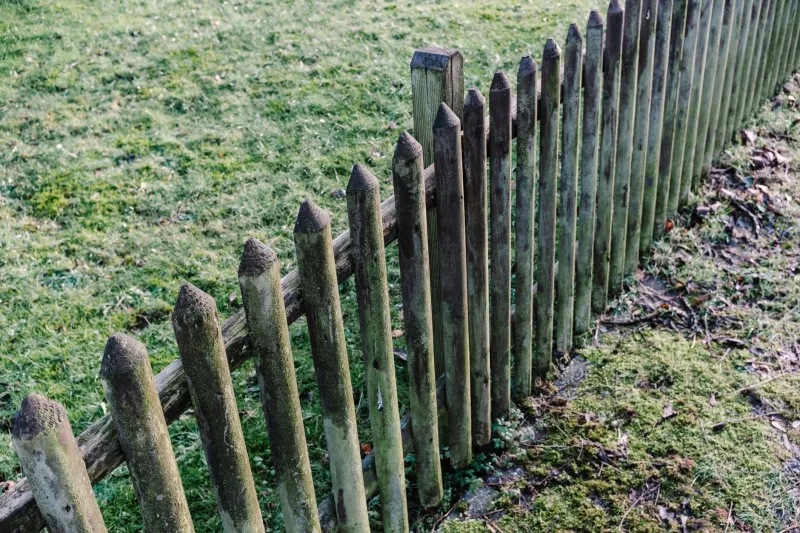
- Slatted screens: horizontal or vertical slats can provide a visual screen while allowing air to bleed through. Slat width, spacing and overlap determine both privacy and porosity.
- Trellis or open tops: a solid lower panel with an open upper section can preserve privacy at eye level while reducing the sail effect above it.
- Hit-and-miss or woven panels: these offer a textured boundary with controlled gaps, though they vary considerably in robustness and maintenance requirements.
- Mixed planting: hedges and windbreak planting can be highly effective, but they take time to establish and require appropriate species, spacing and aftercare.
A common starting point for shelter is a boundary with some degree of openness. Contractors may discuss figures in the region of 20–40%, but the right proportion depends on exposure, fence height, the area being protected and the privacy requirement. A coastal site with little upstream shelter will behave differently from a suburban garden with neighbouring buildings and mature trees.
For many domestic boundaries, a mixed design works well: a solid lower section for privacy and containment, a slatted or trellis upper section to relieve pressure, and planting to soften the line. For commercial property managers, the balance may shift towards durable slatted screens or open mesh where visibility and airflow matter more than complete screening.
Matching the Boundary to the Exposure
Wind behaviour is local. Prevailing south-westerly winds matter, but so do topography, gaps between buildings, the height of adjacent boundaries and the length of an uninterrupted fence run. A contractor should ask what the boundary is protecting, how often the area is used, and whether the problem is steady wind, gusting or funnelling.
Specification should follow that assessment. Post sizes, foundation depth, concrete mix, rail fixings and bracing all need to suit the design load. Gates deserve particular attention: a heavy gate in an exposed position places concentrated force on hinges, posts and latches. If a gate is automated, the drive system and safety devices must also be compatible with the way the gate behaves in wind.
Planning considerations may arise where a boundary is near a highway, in a conservation area or above permitted development height. These are separate from wind performance, but they should be checked before the design is fixed.
What to Ask Before Work Starts
A useful conversation with a contractor should cover more than panel style. Consider asking:
- What wind exposure has been assumed for this site, and is the design fully solid, porous or mixed?
- How will the proposed fence behave at its ends and where it meets existing walls, hedges or buildings?
- What post sizes, foundation depths and fixings are specified, and why?
- Will the boundary create a funnel or a downdraught in an area that is used regularly?
- How will water drain away from posts and panels, and how will debris be cleared?
- What inspection and maintenance regime is recommended, particularly after storm events?
- For commercial premises, how will installation be managed around access, deliveries and site safety?
Early Warning Signs on an Existing Boundary
Wind damage rarely appears without warning. A boundary that is struggling often shows small symptoms first. Check for posts that have begun to lean, cracks in the ground at post bases, loose brackets or missing caps. Listen for panels that rattle or lift in gusts, and look for repeated bowing or fixings that work loose. Gates that drop, drag or fail to latch may be signalling movement in the hanging post rather than a simple hinge problem.
Also examine the ground. Scoured soil, standing water or eroded patches at the base of a fence can point to concentrated airflow and poor drainage. Trapped debris and vegetation pressing against panels add load and hold moisture. If a fence line runs close to a wall or building, assess whether the gap between them has become a wind tunnel.
A single storm can expose a weak fixing, but repeated failures usually point to a design issue. Repairing the same panel every winter is a sign that the boundary is under-specified or poorly suited to its exposure.
A Calmer Specification
A successful windbreak is rarely made from one material or one height. It usually combines a clear privacy strategy with controlled openness, robust fixings and a maintenance plan. Avoiding long, uninterrupted solid runs, staggering heights where appropriate and using planting to soften edges can all help. The boundary should look deliberate rather than improvised, and it should be buildable with the posts and foundations the site actually requires.
Crescent Fencing approaches boundaries as long-term infrastructure: built to last, with gates fitted right. Before specifying a windbreak, decide what needs shelter, what needs privacy and what the site can safely support. A fence that releases pressure is often the one that performs best when the weather turns.